Works No. 2528 · 1938
Dockyard Yard No. 482.
 Chatham HistoricDockyard Railway
Steam-powered workhorses · 1938–43
At Chatham, the steam cranes did double duty: hauling railway wagons and lifting the heavy loads that kept the Dockyard working.
Meet the cranesThese were locomotive yard cranes: mobile steam cranes built to travel around the Dockyard railway as well as lift goods.
Grafton Cranes Ltd built them at its Vulcan Works in Bedford. The Dockyard received its cranes during the 1930s and 1940s. Their six-wheeled chassis carried a coal-fired boiler and a two-cylinder engine that powered both movement and lifting.
On the rails, the cranes could haul wagons through the yard. At a work site, the same steam plant drove the jib to lift and place heavy materials.
Their worm-driven jib and single hoist rope offered different lifting capacities depending on reach: five tons at 24 feet, or three tons at the full 30-foot reach.
They were practical pieces of dockyard engineering, combining the mobility of a locomotive with the reach of a crane.
One railway volunteer had watched these cranes at work for years. When their future was put to the hammer, he stepped in.
The former Dockyard draftsman had come to buy his old drafting table. Instead, three Grafton cranes came up for sale: Works Nos. 2528, 2547 and 2675.
The only other bidder was a local scrap merchant. Unable to let the cranes be cut up, he bid for the lot—and won. He saved them from the cutter’s torch, but spent the money he had hoped to use for his table.
“He saved three cranes from the cutter’s torch.
His drafting table had to wait.”
Six five-ton Grafton locomotive yard cranes had worked at Chatham. Four survive and remain at the Historic Dockyard today. One is Dockyard-owned; the others are privately preserved. Railway volunteers help keep this working heritage alive.
Two did not survive: one rolled onto its back on site; another suffered an unscheduled rapid self-disassembly. We are still tracing the dates and identities behind these losses.
Sources: Trust railway history · Conservation Management Plan
Works No. 2675 · 1943 · Dockyard Yard No. 582
Today, No. 2675 hauls demonstration trains, gives visitors the chance to try operating a steam crane, and brings the fairground game Hook-a-Duck to life. It’s a playful way to see the remarkable control and dexterity these machines demand.
A memorable day out — orThe perfect gift.Book a Steam Crane Experience↗Four survivors are identified in the Trust’s published fleet list. Earlier records name a fifth crane; the sixth is still to be identified.
Dockyard Yard No. 482.
Dockyard Yard No. 517.
Dockyard Yard No. 542. Its later location is unknown.
Dockyard Yard No. 558. Owned by Chatham Historic Dockyard Trust; non-operational.
Dockyard Yard No. 582. Privately preserved and operational.
A sixth five-ton Grafton is included in the Dockyard total; its works and yard numbers are still being researched.
Two cranes were lost. Their identities have not yet been matched to the two accident stories above.
Open the searchable steam crane register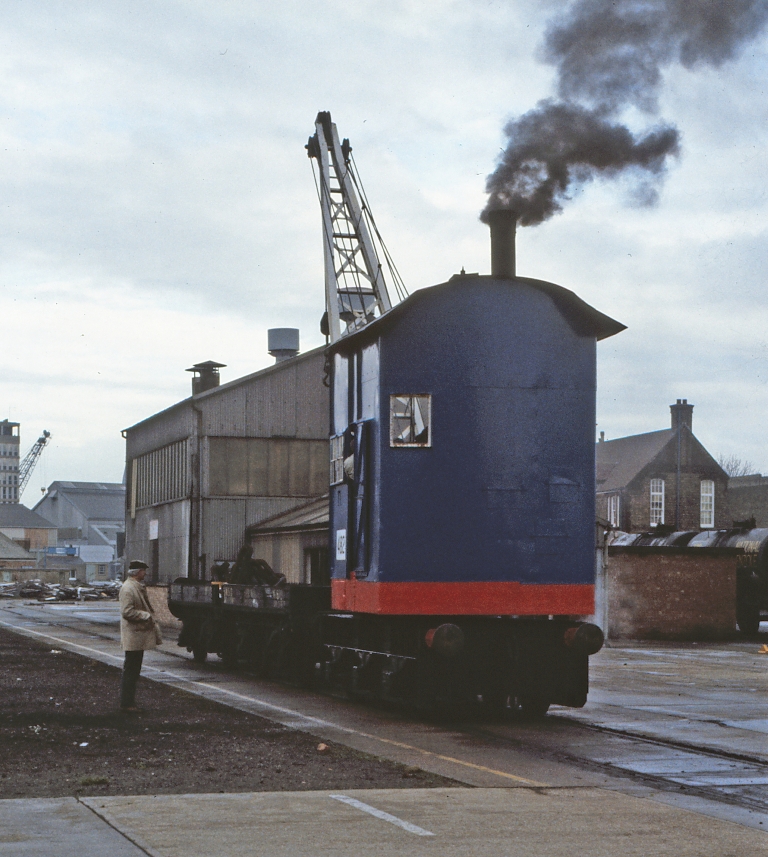
Works No. 2528 · Yard No. 482 · pictured with its new owner in 1984